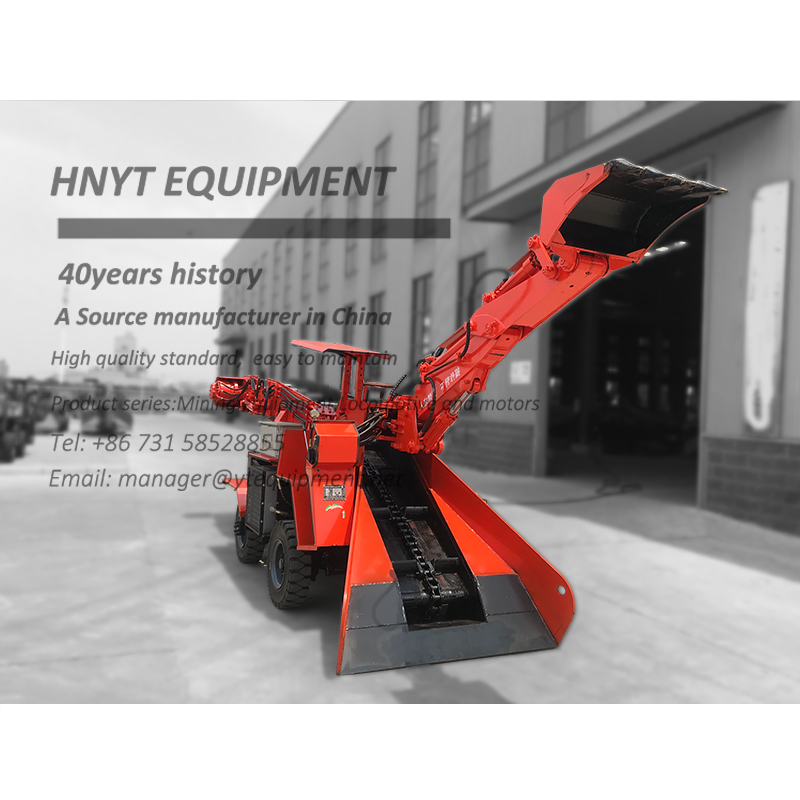
The rock shovel loader is a key piece of equipment in mining operations, and its maintenance directly affects both service life and operational safety. Proper daily maintenance, regular inspection, component care, and fault prevention are essential to keep the machine in excellent working condition.
1. Daily Maintenance
After each shift, use compressed air to clean exposed parts of the rock shovel loader, especially the rolling tracks of the bucket frame, to reduce wear. Remove accumulated debris such as stones, cement slurry, and other residues. Pay special attention to cleaning the motor cooling fins and the foot brake area. Always clear stones, steel rods, or wires stuck in the tracks to prevent damage.
2. Tightness Inspection
Regularly check all bolts on the components, reducers, and motors. Tighten any loose bolts promptly to ensure structural stability. Inspect the lifting chain and buffer springs carefully. Tighten any loose bolts on the track plates and structural joints; replace them immediately if they cannot be tightened properly.
3. Lubrication Maintenance
There are 11 pin shafts in the working mechanism that require lubrication at least once a week. Use an oil can to pour lubricant directly into the hinge gaps when needed. Check the vent plug on the reducer. If the temperature is high, unscrew the plug slightly to open the vent hole, allowing proper air circulation and avoiding pressure buildup.
4. Regular Component Care and Fault Prevention
Perform periodic checks on electrical connections, hydraulic lines, and moving parts to prevent early wear or failure. Replace worn parts promptly and use genuine lubricants and spare parts to maintain system reliability. Preventive maintenance not only reduces downtime but also ensures the rock shovel loader operates safely and efficiently.
A well-maintained rock shovel loader ensures long-term performance, reduced repair costs, and safe operation in mining environments. By performing daily cleaning, timely inspections, regular lubrication, and preventive maintenance, operators can maximize efficiency and extend the machine’s service life while maintaining the highest safety standards.